Seven nights aboard M/Y Solace from Bergen to Ålesund — through Hardanger, Sognefjord and Geiranger, into the deepest fjords of Norway's western coast.
Norway's western coast holds the deepest fjords on Earth. Sognefjord drops more than 1,300 metres below the sea and reaches over 200 kilometres inland. Geirangerfjord is UNESCO-listed for the same reason it stops conversation on the bow — walls of black rock that hold snow into summer and drop cliffs of waterfall into quiet water.
This route runs the length of the western fjords. Solace boards at Bergen, the old Hanseatic city set among seven mountains, and works her way up the coast to Ålesund — through Hardanger, Sognefjord and Geiranger, transiting by day and lying at anchor at night. Her tenders carry guests into the side arms the yacht cannot reach, to the base of the waterfalls and up to the ice.
Solace is a 57-metre Feadship, reborn in a ten-month refit at Pendennis and built for quiet voyaging. Her 12-metre Windy chase tender, by Espen Øino, is invaluable for exploring the fjords and their coastal arms. Twelve guests. Fourteen crew. A dedicated expedition leader.
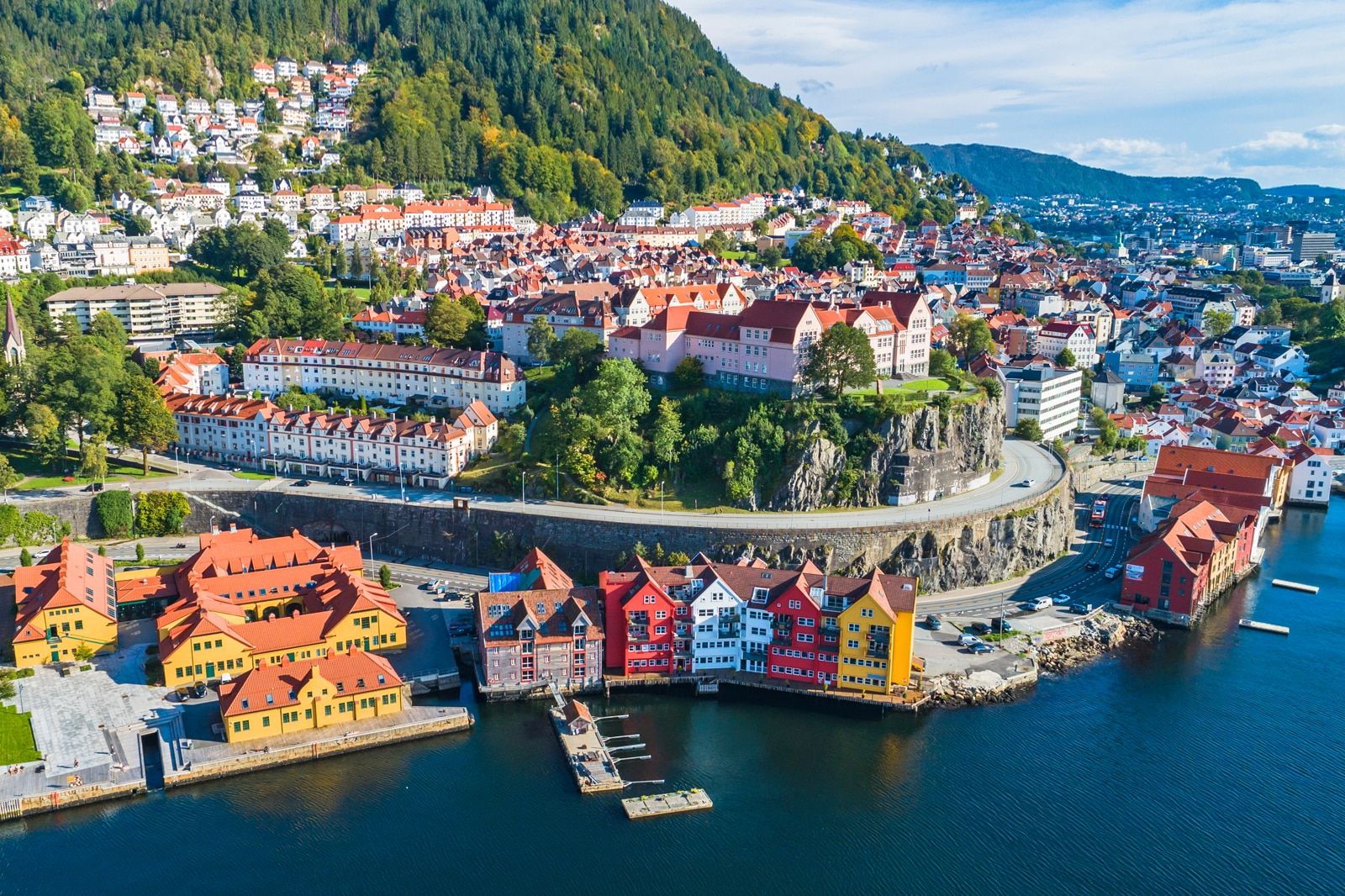
Bergen is the gateway to the western fjords and the natural place to begin. Norway's second city sits among seven mountains on the Atlantic coast, built on the Hanseatic trade that ran through here for four centuries. The old wharf at Bryggen — a row of leaning timber merchant houses along the harbour — is a UNESCO World Heritage Site, and the fish market at its head has traded on the same water since the Middle Ages.
Guests join Solace in Bergen during the afternoon and settle aboard. Through the evening she repositions toward Hardangerfjord, leaving the first full day clear for the fjord country to the south.
Hardangerfjord reaches more than 170 kilometres inland from the coast — the second-longest fjord in Norway and the heart of its orchard country, the hillsides white with blossom in spring and heavy with apples, plums and cherries by late summer. Above the southern shore lies the Folgefonna icecap, one of the largest glaciers on the Norwegian mainland.
Solace anchors off Rosendal, home to Baroniet Rosendal — the only barony ever created in Norway. The 17th-century manor stands in a renaissance rose garden beneath the mountains, still in bloom in August.
Sognefjord is the longest and deepest fjord in Norway — the "King of the Fjords" — running over 200 kilometres inland and dropping more than 1,300 metres below the surface at its deepest. Solace spends the day in its quieter inner reaches, near Fjærland and Balestrand, where the water narrows beneath steep forested walls and arms of the Jostedalsbreen — mainland Europe's largest glacier — reach down toward the fjord.
Fjærland sits at the foot of two glacier tongues and is known as the Book Town of Norway, its old buildings given over to secondhand bookshops. Balestrand, across the water, is a fjord village of timber villas and gardens. Either makes a base for walking, kayaking and time ashore.
Today offers a choice between two of inner Norway's great excursions, reached from the head of the fjords. Both put the high country and the glacier within a single day, and the decision can be made with the expedition leader to suit the group and the weather.
Flåm sits at the head of Aurlandsfjord, a narrow southern branch of the Sognefjord system. The Flåm Railway climbs from the fjord to the mountain station at Myrdal — 865 metres in 20 kilometres, among the steepest standard-gauge railways in the world — past the Kjosfossen waterfall and switchbacks cut into the rock. The Stegastein viewpoint stands 650 metres above the fjord on a curving steel-and-timber platform.
From Gaupne, at the head of the Lustrafjord arm, the road runs up the Jostedal valley to Nigardsbreen — one of the most accessible tongues of the Jostedalsbreen. A short boat crossing of the glacial lake and a walk over bare rock bring you to the ice, where guided blue-ice walks run through the summer.
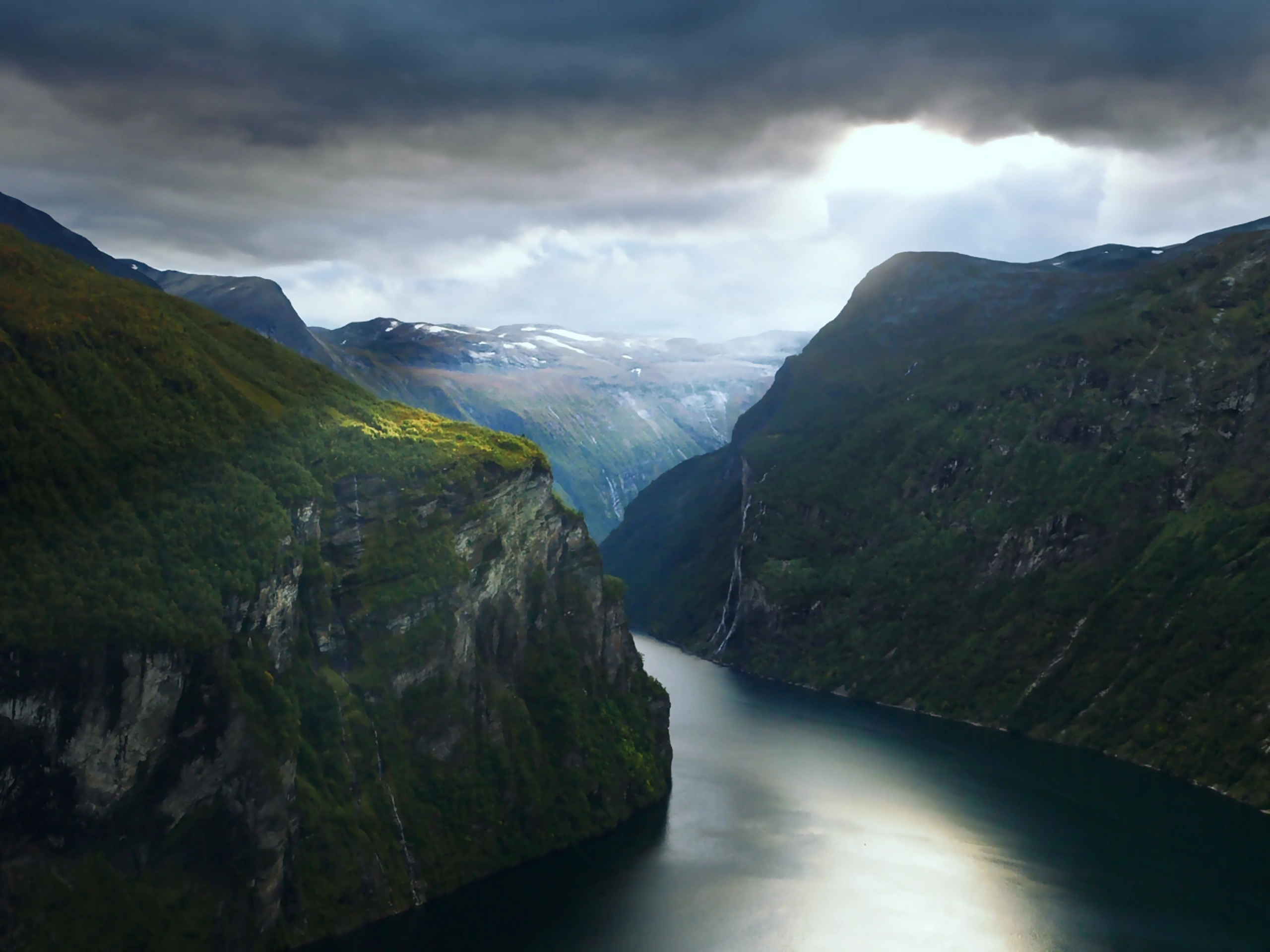
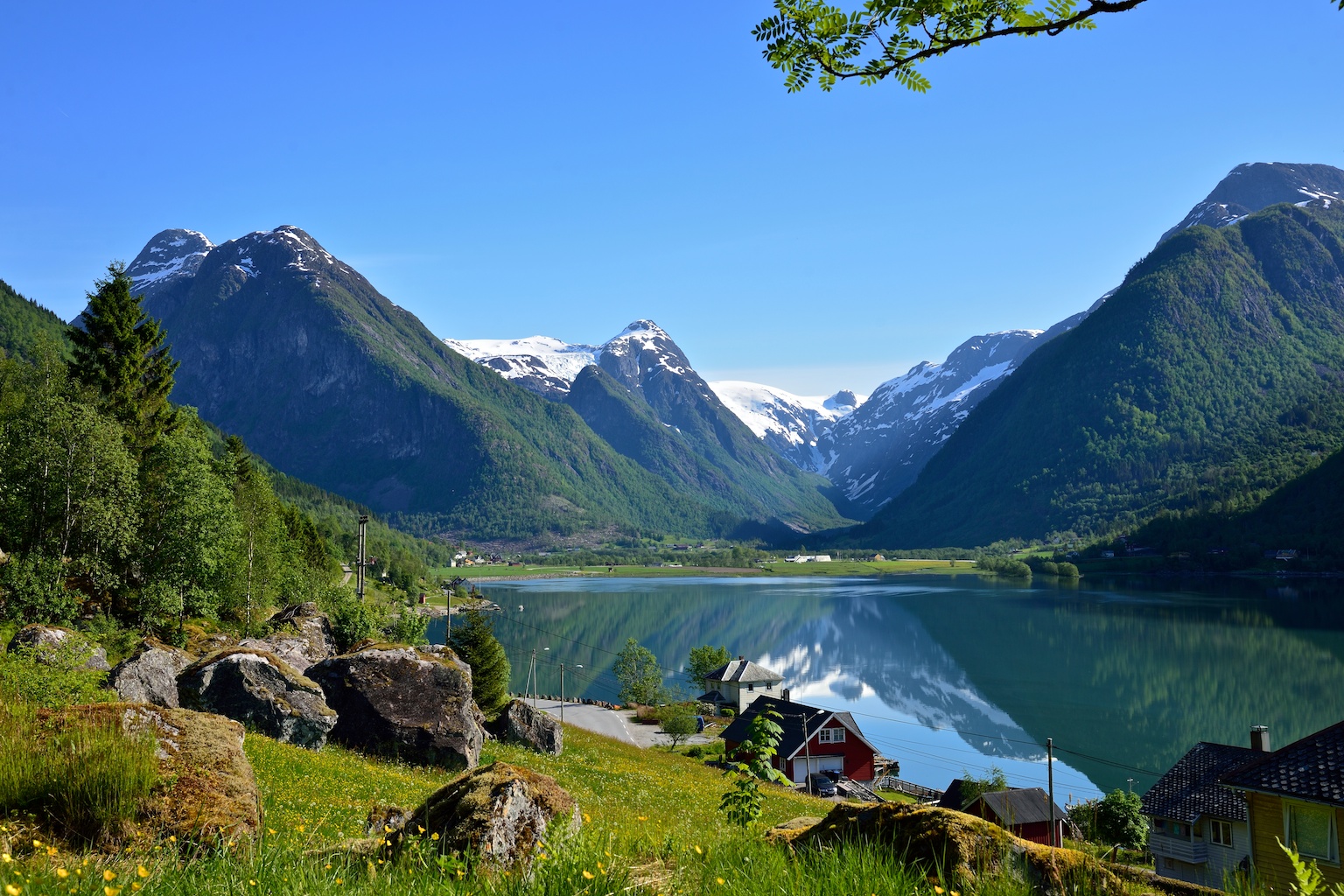
A day in quieter water. Dalsfjorden cuts into the Sunnfjord coast, away from the main fjord routes — a fjord of small farms, forest and waterfalls falling down the rock walls, where Solace can lie at anchor and the tenders and kayaks do the exploring.
It is a day built around the water itself, and around farm country that sees few visitors — the kind of place the yacht's range and her tenders are made for.
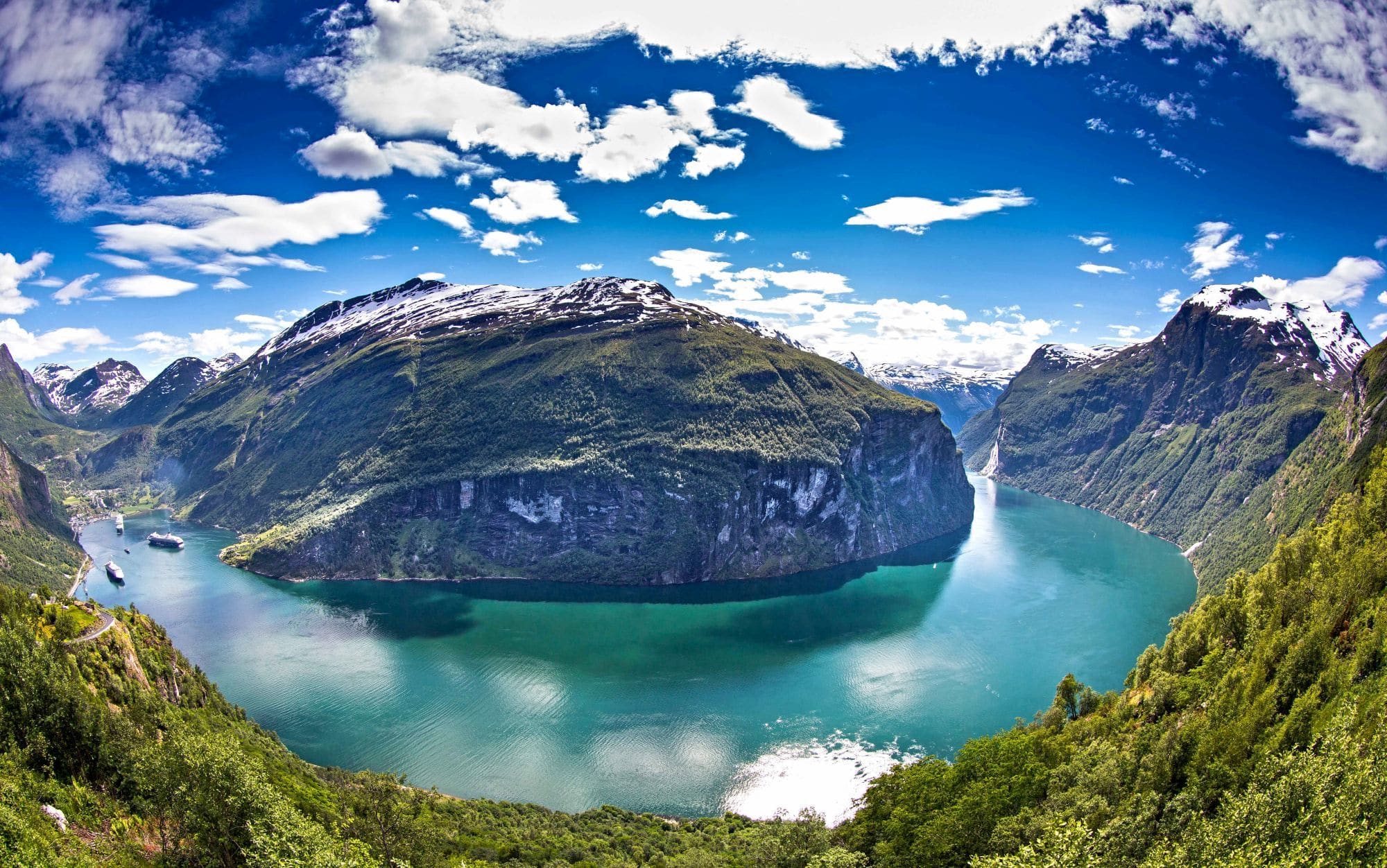
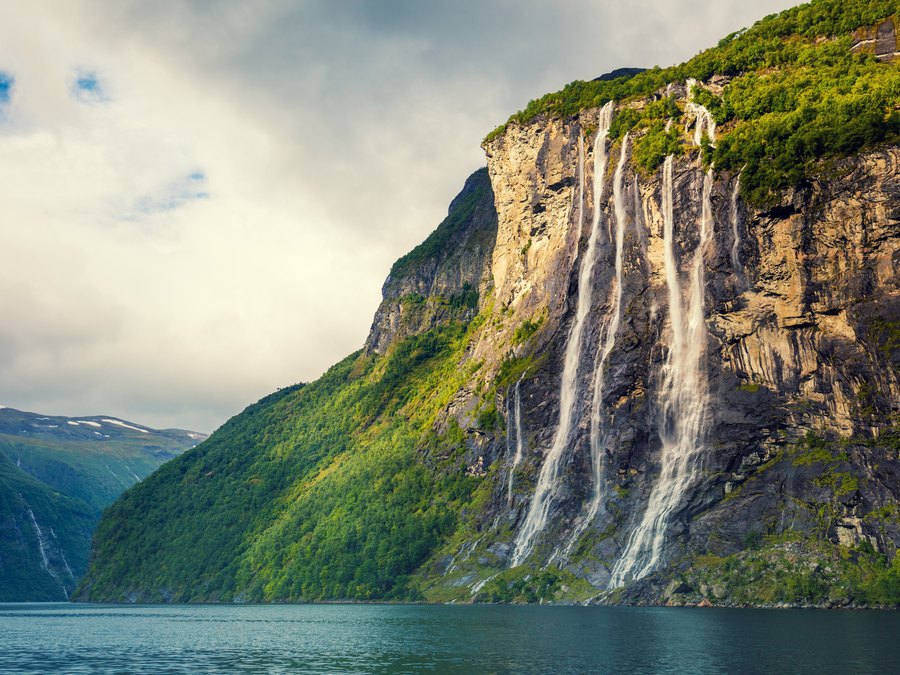
Geirangerfjord is the most famous of all the Norwegian fjords and a UNESCO World Heritage Site — a deep, narrow arm of Storfjorden walled by near-vertical rock, with waterfalls falling straight from the cliff tops into the water. The best known, the Seven Sisters, drops in seven separate streams down the northern wall.
Solace lies at anchor beneath the falls. Abandoned mountain farms cling to ledges high above the fjord; Skageflå, reached by a steep climbing path from the water, is the most striking, with the whole fjord opening up beneath it.
Valldal lies at the head of Norddalsfjorden, a side arm of Storfjorden ringed by mountains — strawberry country, known across Norway for the fruit grown on its fjord-side farms. It is the base for getting up into the high country: the valleys run back into peaks and rivers, and the famous Trollstigen mountain road climbs its hairpins not far to the north.
The day is built around active time ashore, with Solace at anchor below.
Solace arrives at Ålesund, the end of the voyage. The town is unlike anywhere else on the coast: after a fire destroyed its centre in 1904 it was rebuilt almost entirely in the Art Nouveau, or Jugendstil, style, and today it stands as one of the most complete Art Nouveau townscapes in the world, set across islands at the mouth of the Storfjord.
There is time ashore before onward travel — the 418 steps up to the Aksla viewpoint give the classic view over the rooftops and out to the islands and the Sunnmøre Alps beyond. Guests disembark in Ålesund and transfer for onward flights.
Approximate route only — final routing is subject to weather, sea and ice conditions, and local guidance.


A 57-metre Feadship, built in 2005 and reborn in a ten-month refit at Pendennis completed in September 2025, with interiors by Vickers Studio. Five suites and two guide berths for twelve guests, and fourteen professional crew. Sauna, gym, sky lounge and library aboard.
Her 12-metre semi-custom Windy chase tender, by Espen Øino, is invaluable for exploring the fjords and their coastal arms — into the side reaches of Hardanger and Sognefjord, to the base of the waterfalls, and wherever the coast rewards a closer look. E-powered watercraft round out a vessel built for quiet voyaging.
Summer temperatures along the Norwegian coastline in late June typically range from the upper 40s°F (9°C) to 60°F (15°C), though a single day can swing from the 40s°F (9°C) to 77°F (25°C). This is a marine climate — rain and fog are as likely as bright, sunny days. For landings, dress in layers so you can adjust your insulation as conditions change.
Dress on board is practical: clothes to wear on landings, casual clothes for the vessel, a jacket for the deck, and something a little nicer for dinner if you choose.
Binoculars are essential for distant wildlife and birds — you will use them a lot, so invest in a quality pair. A magnification of 10 or 12 is about as much as most people can hold steady by hand; 8×42 or 10×42 are popular, well-balanced choices. Image-stabilised models are excellent.
Kite Optics image-stabilised models are field-tested and recommended by EYOS staff. As a trusted partner, Kite Optics extends a 10% discount to EYOS travellers — enter promo code EYOSKITE10 at checkout. usa.kiteoptics.com